From Parked to Productive: Chad Folkening, the Domain Architect, Goes Onchain

Q/A with Chad Folkening, Founder of eCorp.com and Global Ventures, LLC
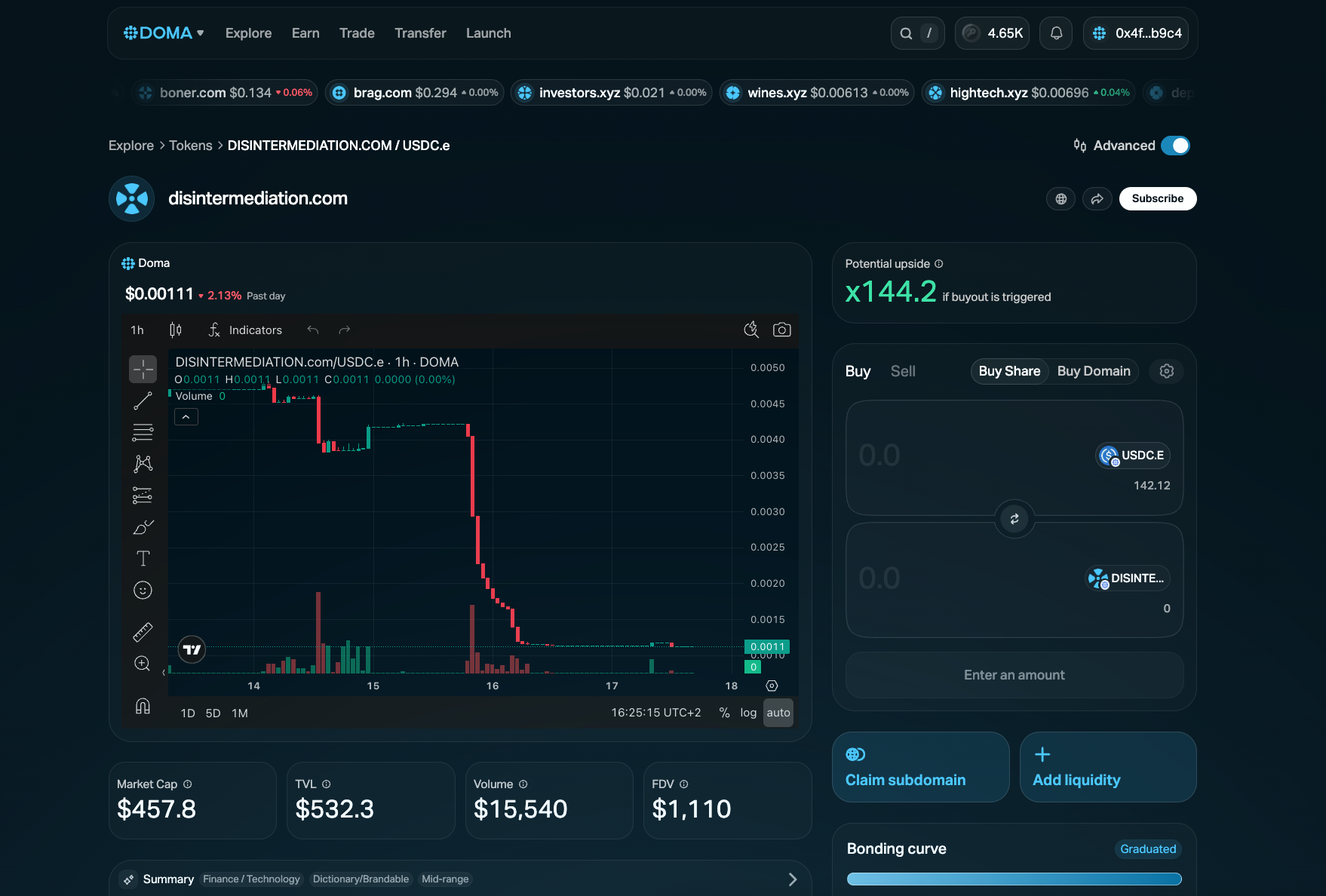
In early June, two domains went live on Doma and both graduated their bonding curves.
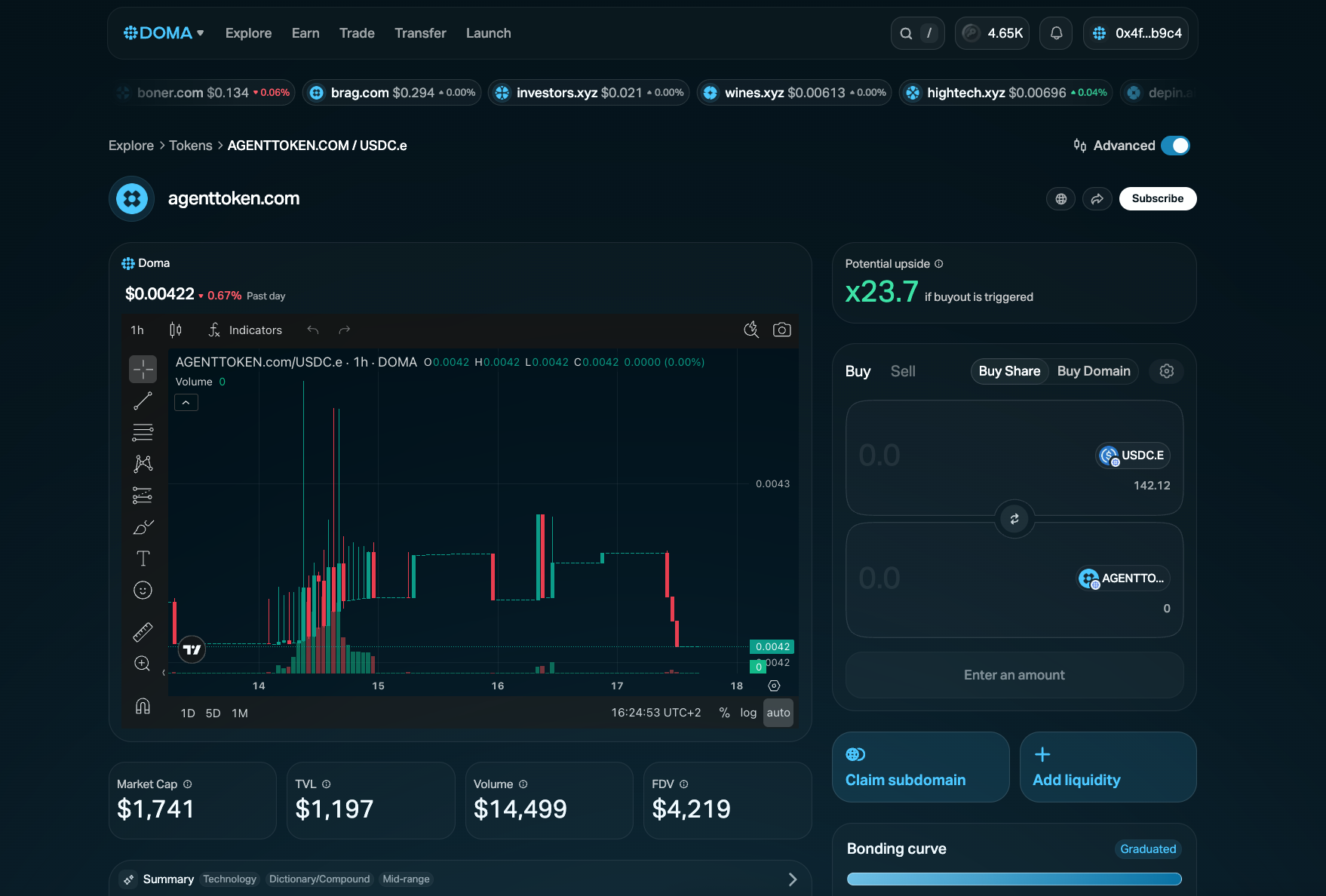
disintermediation.com launched June 1. agenttoken.com followed June 3.
Both belong to Chad Folkening — serial entrepreneur, co-founder of Domain Holdings, founder of eCorp.com, and one of the most prolific premium domain holders on the internet with a portfolio exceeding 26,000 names.
We sat down with Chad — live on Doma On Air Episode 7 — to talk about idle assets, onchain liquidity, and why he believes the era of the parked domain is over.
Q: You've been building in the domain space since 1996. How did it start?
Chad: I bought my first URLs in 1996 and have been doing it full-time since. It's kind of crazy that we're at 30 years already. I was just a young entrepreneur hustling on some other businesses, saw the opportunity to buy some real estate, and just started buying as much as we could, how we could. Here we are 30 years later — made a career out of it.
Q: You founded eCorp back in 1998. What was the original vision?
Chad: eCorp was really built around the vision of building domains into autonomous electronic corporations — what we now call smart entities. A lot of people in the crypto space know DAOs. We were building AI DAOs on domains back in 1998. So it's really a business model of an autonomous corporation on a domain. We never got into the business to own domains to sell them. We got in to build good ideas into businesses. That's what eCorp is about — building electronic automated companies on domains.
Q: What's the honest reality of sitting on premium inventory that isn't actively developed?
Chad: The problem is liquidity. Traditional domain marketplaces are slow and opaque. You list a name, you wait. Sometimes months, sometimes years. The asset does nothing in the meantime — but it's still costing you to hold.
When you're sitting on 26,000 names, liquidity isn't a nice-to-have. It's the whole game. Doma changed what that looks like.
Q: What changes when a domain moves onchain?
Chad: Everything changes about how value moves. You have to find an underutilized asset nobody appreciates and bring new technology on top of it — like real world assets. Tokenization adds utility into the asset that gives it the potential to go wherever it wants to go, however fast it wants to go. Without tokenization, a domain is just a digital asset that sits in the registrar. Maybe a website. But you don't have utility. And utility is what creates value.
Q: You've been tokenizing domains longer than almost anyone. What took so long for the market to catch up?
Chad: We were always two to three to five years early. We did it on Ethereum, then Binance, then Base. We were trying to turn visitors into contributors — change the business model from pay-per-click parking into shared ownership. The problem was there weren't enough wallets. People didn't understand it. The infrastructure just wasn't there yet.
Now it is. You don't have to educate people on whether they should be doing this anymore. The wallets are getting better. Payments are going onchain. Moody's is bringing credit ratings onchain. The infrastructure layer is mature. That's what changed.
Q: Let's talk about disintermediation.com. Why that name — and why now?
Chad: That's a 1998 domain for me. Disintermediation means cutting out the middleman. Period. But that is technically the definition of peer-to-peer. When peer-to-peer came out around 1999, you started seeing Skype and other apps using the internet to transport data directly. I saw it then: that is a platform that will revolutionize every industry.
The name is long, but it's not about the domain — it's about the meaning. And the meaning describes exactly what crypto, DeFi, and AI agents are doing to markets right now. It's never been more relevant.
Q: And agenttoken.com — that one feels very 2026.
Chad: We wanted to target the crypto-native audience because that's still a relatively small market, but it's growing fast. You're not even going to know you have a crypto wallet soon — it's just going to be infrastructure. Agent token, bot token — these names speak directly to that world.
But there's a bigger thesis here. Brian Armstrong just went on CNBC and said Coinbase is doing agent commerce now. Every agent is going to have a wallet. An agent needs a token. That's the next paradigm — and agenttoken.com names it.
Q: You've talked about domains as DNAs — Digital Native Assets. What does that mean in practice?
Chad: A house is a physical analog product. It's not digitally native. A domain has inherent digital native infrastructure that aligns with crypto and AI in a way physical assets never can. That's why I think there's real upside in tokenizing them — it's one more layer of utility on top of an already digitally native asset.
We're building this out ourselves with our AgentDAO — about 548 agent and bot names, including contentagent.com, socialagent.com, codeagent.com. We call them eCorp smart entities. Other people call them agents. The domain is the business.
"Don't just build to the human economy — build to the agent economy.
– Chad Folkening, Founder eCorp"
Q: What's the message for domain owners still sitting on premium inventory?
Chad: Don't go to your grave with these domains. There are 50 to 100 people who own a lot of the really good assets, and a lot of us are starting to realize — what's the purpose? What meaning do these assets have?
The technology is finally here to unlock them. The market is here. Onchain exposure expands your liquidity channels without abandoning anything you already have. The question isn't whether to bring your domains onchain. The question is how soon.
"Without tokenization, a domain is just a digital asset that sits in the registrar. Maybe a website. But you don't have utility. Don't park your domains. Put them to work. – Chad Folkening, Founder eCorp"
The Bigger Picture
Three decades in, Chad Folkening is more energized about domains than ever — not in spite of AI and blockchain, but because of them. The same thesis he's been building since 1998 (domains as autonomous operating entities) finally has the infrastructure to match.
Both disintermediation.com and agenttoken.com graduated. The model works. And more names from the eCorp portfolio are on the way.
Watch the full interview on our YouTube channel:
Read stories from domain owners who have brought their domains onchain with Doma ⬇️
 Doma Foundation
 Doma Foundation
 Doma Foundation