DAVs: The New Way to Access Premium Domain Portfolios

Premium domains are some of the internet’s most valuable assets, but they have never been easy to access. The best names are usually held by experienced domain investors, private portfolio owners, registrars, or brokers. They trade through negotiated deals, marketplace listings, and direct buyer conversations. For most people, participation has meant either buying a single expensive domain outright or watching major sales happen from the sidelines.
Domain Asset Vehicles (DAVs) are designed to make premium domain exposure more accessible.
A Simpler Structure for Domain Portfolios
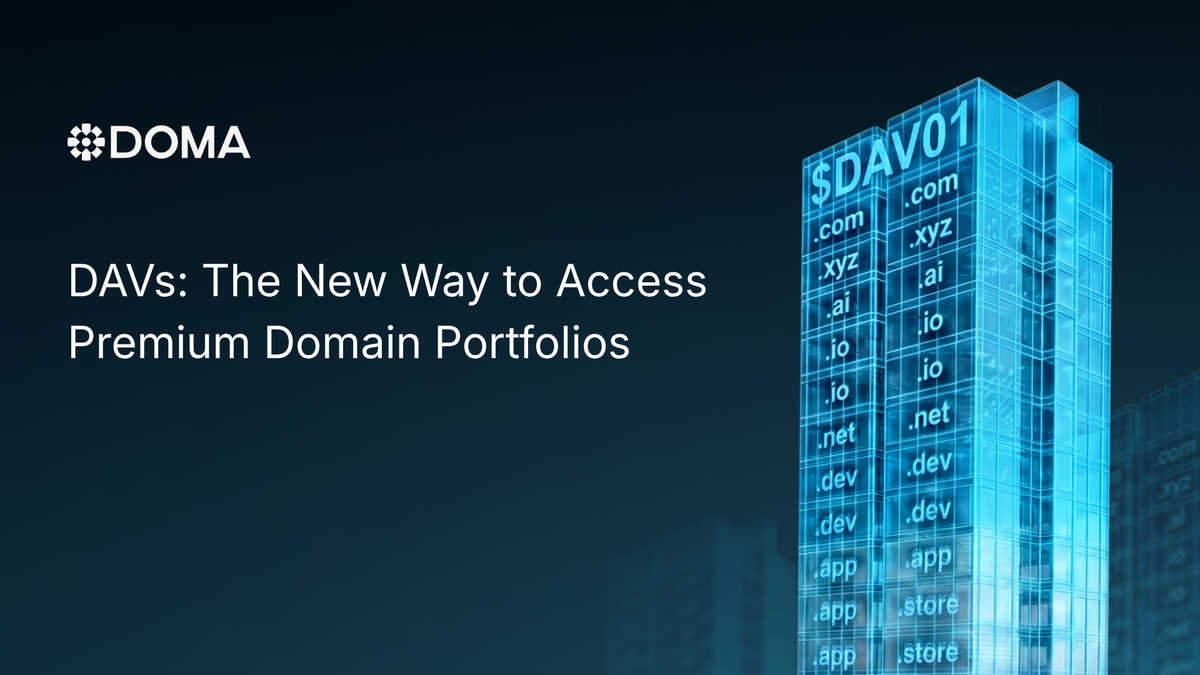
A DAV, or Domain Asset Vehicle, packages multiple premium domains into one tokenized asset.
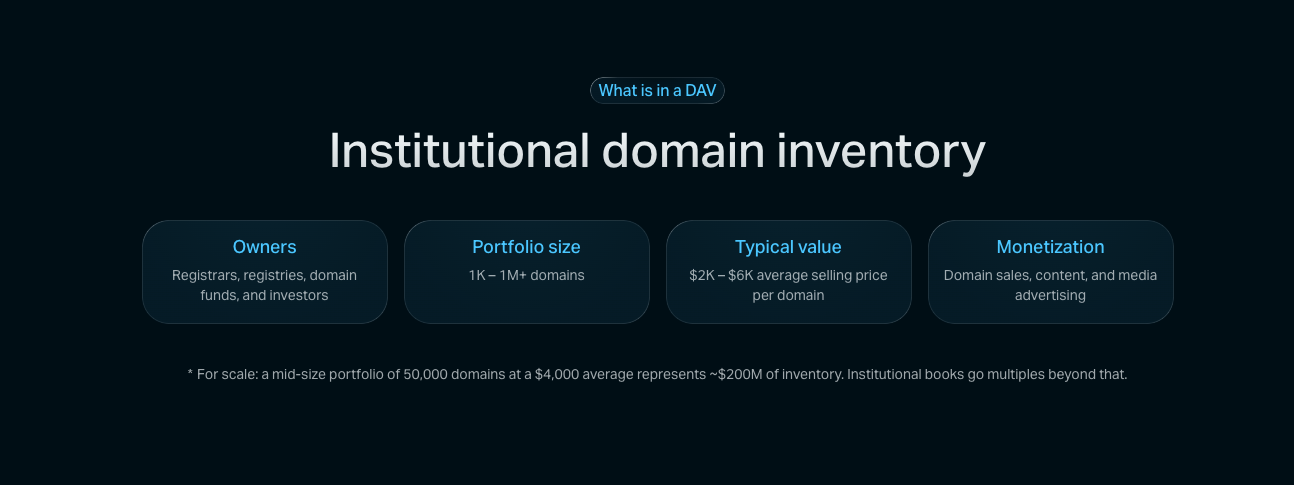
Instead of evaluating and buying individual domains one by one, participants can access a broader portfolio through a single token. That portfolio can include multiple names across different categories, giving holders exposure to more than one potential end-user sale.
The idea is straightforward: a domain portfolio that used to be private, fragmented, and hard to access can now become a structured onchain asset.
From Private Deals to Broader Participation
The domain market has always been driven by one-off transactions. A buyer wants a specific name, the owner negotiates, and the sale closes if both sides agree.
That model works for direct domain sales, but it limits participation. It also means valuable portfolios often remain locked until individual buyers appear for individual names.
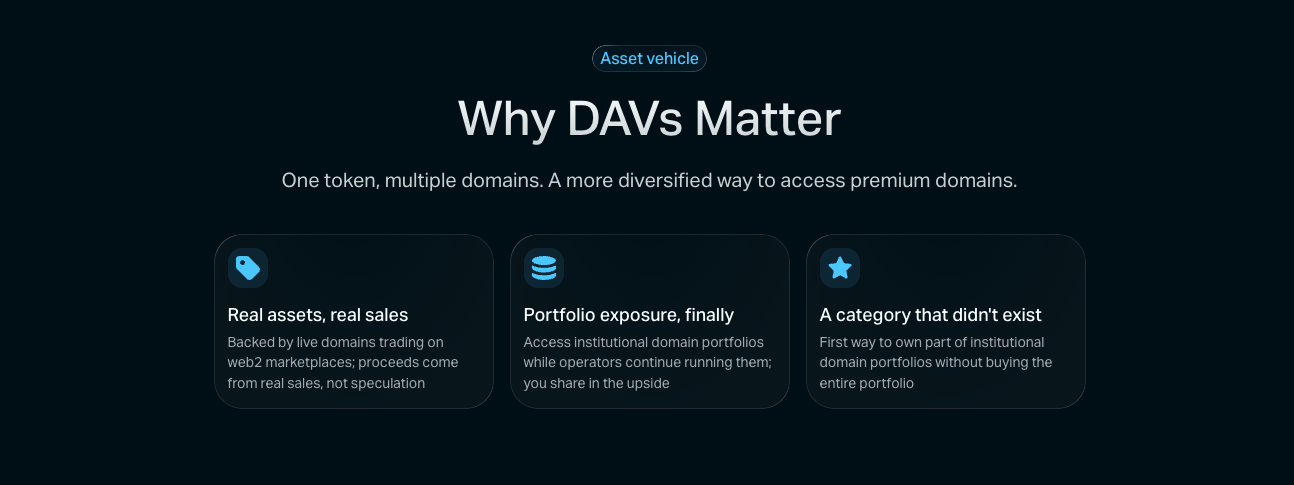
DAVs create a different path. They allow premium domain portfolios to be represented as tradable assets, opening access beyond the small group of insiders who traditionally source and negotiate these deals.
Built Around Wholesale Logic
Every serious domain investor understands the difference between retail and wholesale pricing.
Retail value reflects what an end user might pay for a premium domain. Wholesale value reflects how professional buyers price portfolios today, accounting for time, execution, and sell-through risk.
DAVs use that same framework. NAV is set at approximately 30% of the retail aggregate value of the underlying portfolio, giving participants exposure at institutional wholesale-style pricing rather than full retail.
That discount is central to the structure. It turns premium domain portfolios into assets that can be priced, accessed, and understood by a broader market.
How the Mechanism Works
A DAV starts with a portfolio of premium domains. That portfolio is evaluated, structured, and represented onchain through a tokenized asset.
Participants can hold DAV tokens to gain exposure to the portfolio. Holders who stake can also participate when domains inside the portfolio sell.
When a domain sale happens, proceeds are distributed to staked DAV holders. Value comes from actual portfolio activity, not artificial incentives or token emissions.
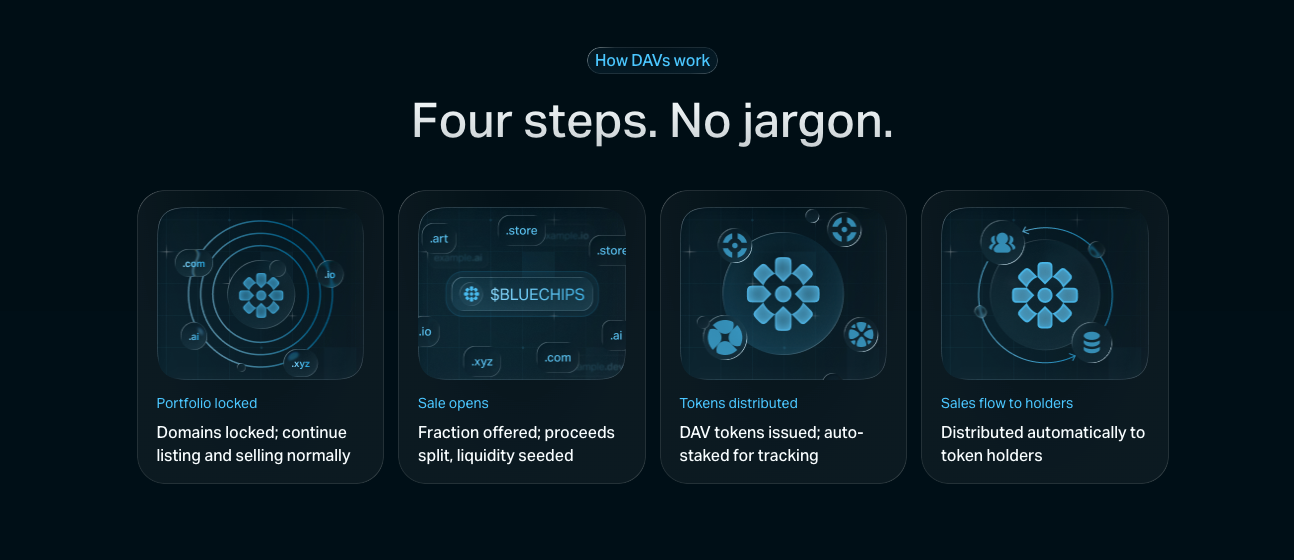
This keeps the mechanism tied to the underlying asset class: real domains, real buyers, and real sale proceeds.
Why Portfolios Change the Game
Single domains can be valuable, but they are also concentrated. A portfolio creates exposure across multiple names, categories, and potential buyers.
That is how professional domain investors already think. They underwrite collections of assets, manage expected sell-through, and look at portfolio-level value rather than relying on one name alone.
DAVs bring that portfolio logic into a format that is easier for broader markets to access.
Access Without Becoming a Domain Expert
Until now, gaining exposure to premium domains required specialized knowledge. Buyers needed to understand valuation, negotiate directly, assess end-user demand, and manage ownership.
DAVs reduce that complexity.
They allow participants to access premium domain portfolios without sourcing individual deals themselves. Instead of needing to become a domainer overnight, users can participate through a structured vehicle built around a curated portfolio.
Real Assets, Real Sale Proceeds
Premium domain portfolios do not need artificial reward systems to create value. They already have a built-in economic engine: domains sell.
Annual sell-through across premium portfolios commonly falls in the 3–6% range. When sales occur inside a DAV portfolio, proceeds flow to staked holders.
That makes the model simple to understand. Participation is tied to actual domain sales, not emissions-based rewards or speculative farming.
Looking ahead
DAVs create a new bridge between premium domain portfolios and broader market participation.
For domain owners, they offer a way to unlock liquidity from assets that have historically been difficult to finance or trade at the portfolio level.
For traders, they create access to an asset class that has usually been limited to insiders.
For the market as a whole, they turn premium domains into structured assets that can be held, traded, and understood more easily.
Premium domains have always had value.
DAVs make that value easier to access.
Apply or join the waitlist