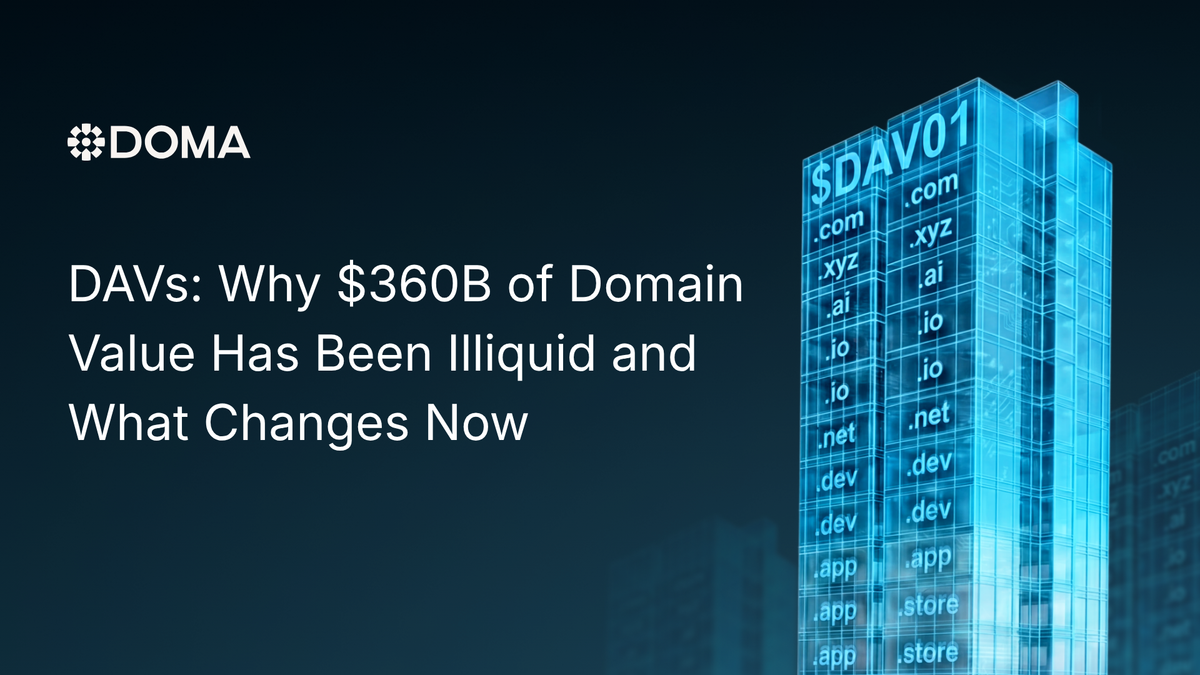
DAVs: Why $360B of Domain Value Has Been Illiquid and What Changes Now

Domains Are the Original Digital RWA
Domains were scarce, ownable, and valuable digital assets long before “real-world assets” became a crypto category.
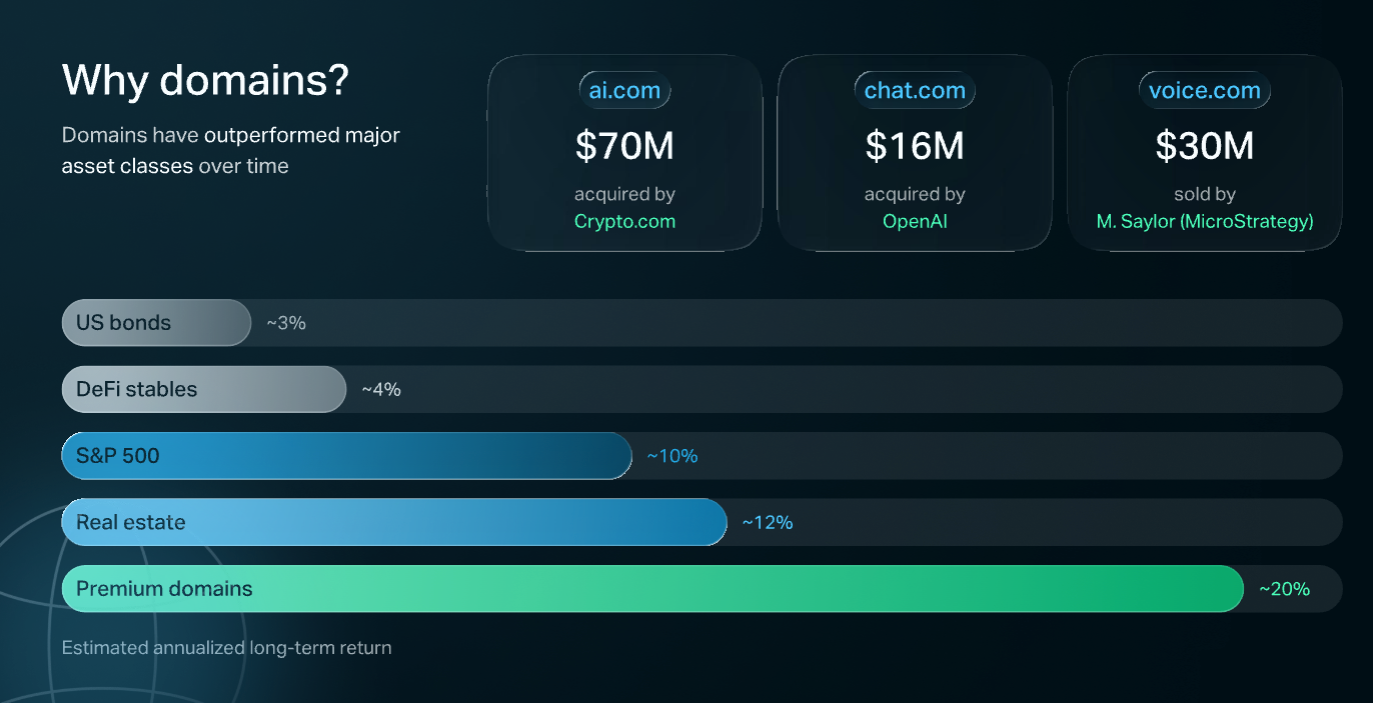
For more than 25 years, premium domains have anchored brands, routed internet traffic, captured search demand, and sold for meaningful prices. Category-defining names like sex.com, voice.com, and ai.com have demonstrated that the best domains are not just web addresses. They are strategic internet assets.
The domain market represents more than $360B+ in value, but most of that value has remained difficult to access.
The Problem Is Liquidity
Premium domains are valuable, but they do not trade like modern financial assets.
A domain may sit inside a private portfolio for years before the right buyer appears. Sales often happen through brokers, marketplaces, direct outreach, or inbound inquiries. Pricing is negotiated manually, and settlement is not built for broad market participation.
That has kept premium domains liquid only at the moment of sale. Until a buyer shows up, the value is largely locked.
Why Domain Value Has Stayed Trapped
The domain market was built for one-off transactions, not portfolio-level liquidity. Domain owners can hold valuable portfolios, but unlocking that value usually means selling names one at a time. Traders may understand the value of premium domains, but getting exposure requires sourcing, negotiating, and underwriting individual assets.
The result is a major gap: domains have real market value, but no simple structure for broader access.
What Is a DAV?
A DAV, or Domain Asset Vehicle, is a tokenized portfolio of premium domains.
Instead of representing one domain, a DAV packages multiple premium domains into one structured onchain asset.
The concept is simple:
⮕ one token
⮕ multiple domains
⮕ broader access
DAVs do not create a new namespace or replace DNS. They bring existing premium domains into an onchain market structure designed for liquidity, access, and distribution.
The Wholesale Discount Unlock
Every domainer understands the difference between retail and wholesale pricing.A premium domain may have a high retail value based on what an end user could eventually pay. But professional investors underwrite portfolios at a discount because they take on time, execution, and sell-through risk.
DAVs bring that logic onchain.
DAV NAV is set at approximately 20% of the retail aggregate value of the underlying domain portfolio. That gives traders exposure at institutional wholesale pricing, not full retail.
How Sale Proceeds Flow
Premium domain portfolios do not need artificial incentives to create value. They sell.
Annual sell-through on premium portfolios often runs in the 3-6% range. When domains inside a DAV portfolio sell, sale proceeds are distributed to staked DAV holders.This is not yield farming. It is not emissions. It is actual proceeds from domain sales shared with stakers.
Because DAVs are priced at a wholesale discount, successful end-user sales can create a meaningful proceeds-share profile for participants.
Why This Changes the Market
Historically, domain value was realized only through isolated sales.
A domain sold, the owner received proceeds, and the rest of the portfolio stayed illiquid. DAVs introduce a different model: the portfolio itself can become an onchain asset.
That means traders can access premium domain exposure through one token, domain owners can unlock liquidity from portfolios, and stakers can participate in sale proceeds when domains sell.
What Changes Now
Domains have always had value. The missing piece was institutional market structure.
DAVs turn premium domain portfolios into onchain assets that can be traded, staked, and accessed by a broader market.
More than $360B+ of domain value has been sitting in plain sight for decades. DAVs are designed to unlock it.
Apply or join the waitlist