DomainFi Explained: How Domain Buyouts Work on Doma

And what the recent tradetheinternet.com Buyout shows
This weekend, tradetheinternet.com was fully bought out on Doma.
A single buyer acquired the entire domain, triggering a payout to all token holders.
Here’s how domain buyouts work and why they matter 👇
What Is a Domain Buyout?
When a domain launches on Doma, the owner sets an initial valuation, also called the BIN price in the app.
This represents the minimum price at which the owner is willing to sell the entire domain.
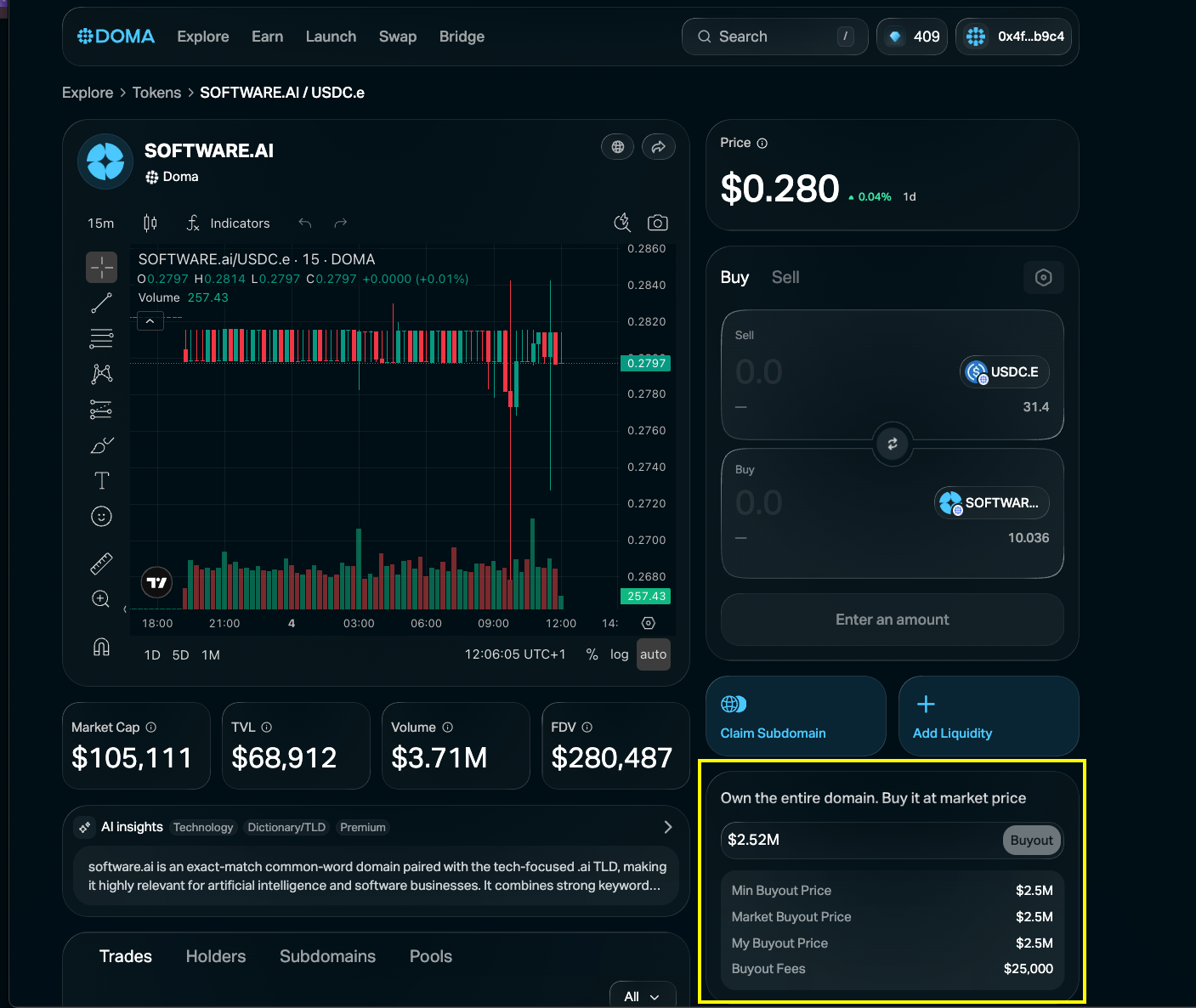
However, the final buyout price isn’t fixed. Instead, it follows a simple rule:
Buyout Price = max (initial valuation, current market value of tokens)
This means:
- A domain cannot be bought out below the owner's original valuation
- But it can be bought out at a higher price if the market values it more
In other words, the market can raise the buyout price over time.
Example: tradetheinternet.com
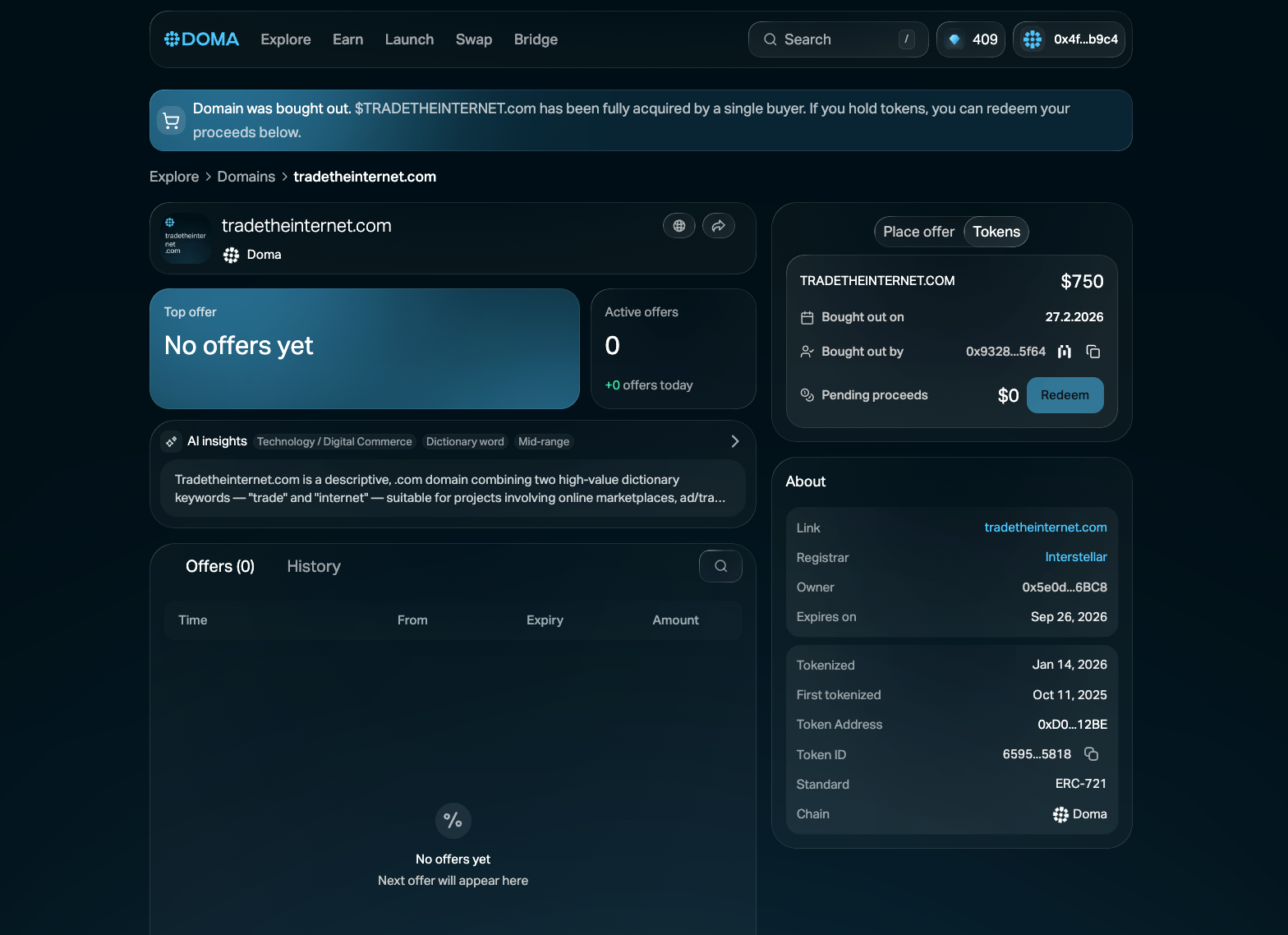
Recently, tradetheinternet.com was fully acquired by a buyer. The domain was bought out on February 27 for $750.
At the time of the buyout, the domain had 100,264.6 TRADETHEINTERNET tokens in circulation and 13,741.4 vested tokens, representing fractional ownership of the asset.
Once the buyout happened:
- The domain was transferred to the buyer
- All token holders became eligible to redeem their share of the buyout proceeds
If you held tokens for this domain, you can now claim the corresponding value in the Doma app.
How Token Holder Payouts Work
Each token represents a proportional share of the domain.
Example: If a domain has a $1,000 buyout price and there are 1,000 tokens, each token represents $1 of the buyout value.
If you hold 100 tokens, you can claim $100 once the domain is bought out.
A Strategy Some Traders Use
Because domain tokens trade on the open market 24/7, their price can fluctuate.
Sometimes tokens trade below the implied buyout value. This creates an opportunity for users to accumulate tokens at a lower price and increase their share of the domain.
If a buyout happens later, token holders receive their proportional payout based on the number of tokens they own.
Another important detail: buyers don’t always pay the full buyout price out of pocket.
Read the full details on our docs:
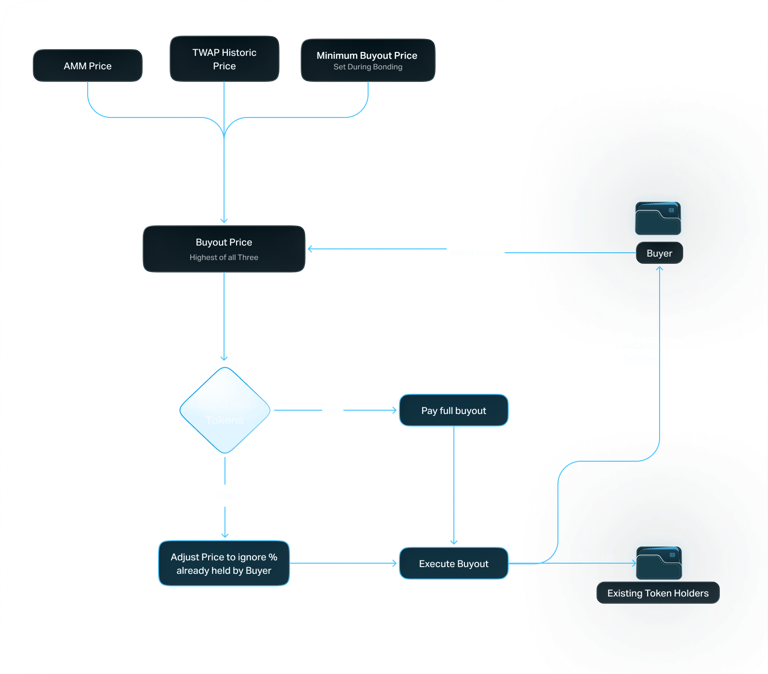
Dynamic Buyout Price: MAX(Original Floor Price, TWAP, Current AMM Price) allows the domains to increase in value based onchain activity, while still providing a floor
Simple Acquisition: Buyer deposits buyout amount in USDC, domain transfers to buyer. There is no voting or wait period.
Shared Upside: Exit funds distributed proportionally to all token holders. If you own 1% of supply, you get 1% of the buyout.
Token Credit: If the buyer already holds tokens, buyout costs are reduced by the percentage owned. But the other holders must be paid the fair buyout price.
If the buyer already owns some of the domain’s tokens, they only need to pay the difference between the buyout price and the value of the tokens they already hold.
In other words, accumulating tokens not only increases your share of a potential payout, it can also reduce the cost if you decide to acquire the entire domain yourself.
While buyouts are never guaranteed, this dynamic creates real market incentives around domain ownership and liquidity.
Why Buyouts Matter
Buyouts connect domain ownership and onchain liquidity.
They allow:
• Buyers to acquire the full domain
• Token holders to participate in potential upside
• Markets to discover real value for digital assets
It’s one of the mechanisms that makes DomainFi work.
Claiming Your Buyout
If you held $TRADETHEINTERNET tokens, you can now claim your proceeds directly in the Doma app here.